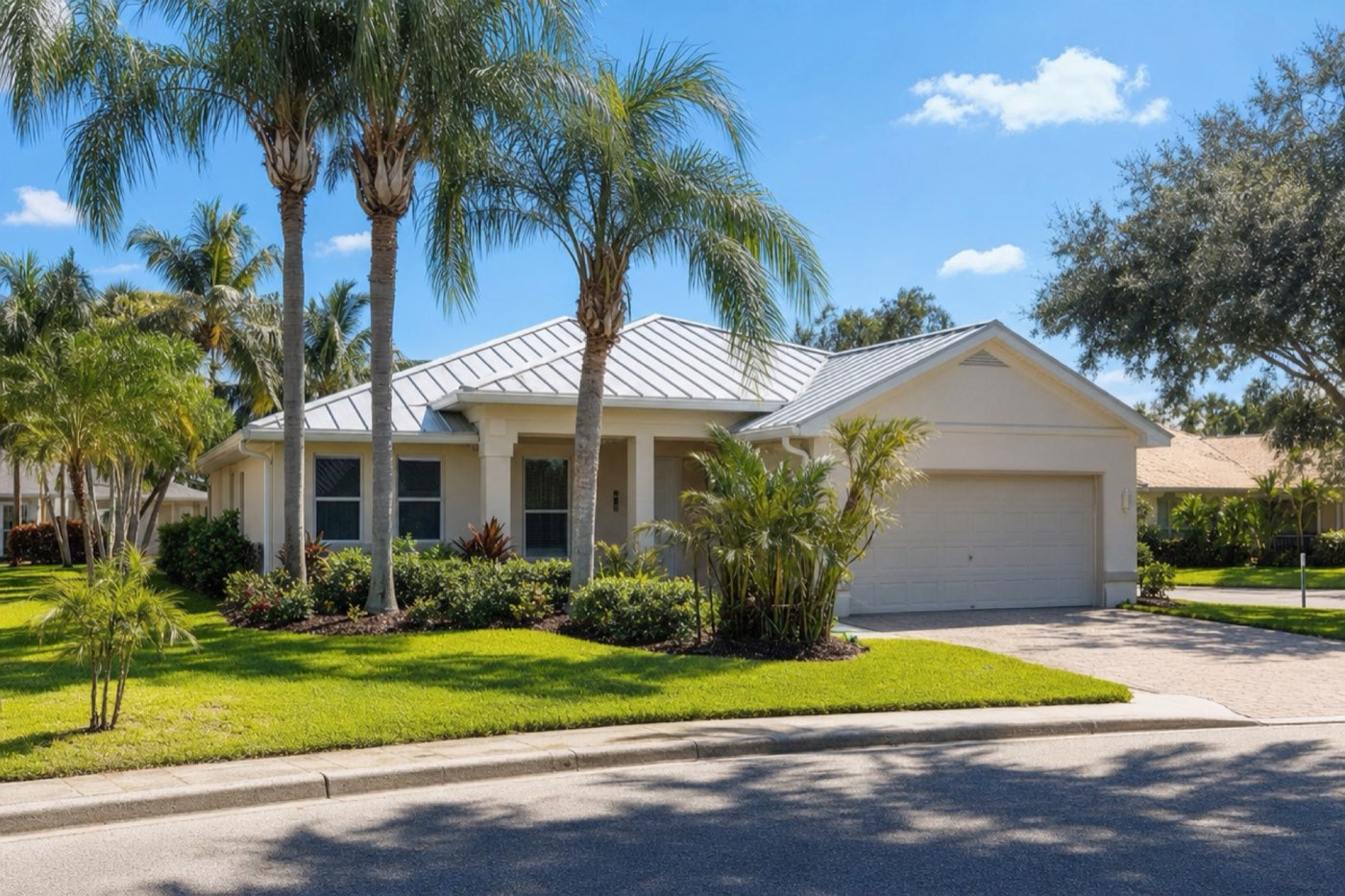
For energy efficiency in Orlando, choose a light, highly reflective metal roof finish and confirm its rated numbers. The Florida Building Code's Climate Zone 1A benchmark is a three-year-aged Solar Reflectance Index (SRI) of 75, with a minimum roof reflectance of 0.63. That benchmark is written for qualifying low-sloped roofs, so on a steep-slope home treat it as the target to ask for. The IRS also says traditional roofing materials generally do not qualify for the federal home improvement credit.
What SRI rating does the Florida Building Code require?
For Climate Zone 1A, Miami-Dade County's summary of the 2023 Florida Building Code roofing changes identifies a three-year-aged SRI of 75. It applies to qualifying low-sloped roofs directly above cooled conditioned spaces.
The same provision offers an alternative. Instead of SRI, a roof can be rated on three-year-aged solar reflectance and thermal emittance.
The Florida Building Commission's analysis of the 8th Edition (2023) Florida Energy Code describes the Climate Zone 1A change as a minimum roof reflectance of 0.63 and a three-year-aged SRI of 75. "Three-year-aged" means the rating counts, not the new-from-the-box value.
Does the SRI 75 rule apply to a steep-slope metal roof?
Do not assume it does. The SRI 75 figure comes from the Climate Zone 1A low-slope provision, and it should not be applied to every steep-slope roof.
Your practical rule of thumb is to use 75 SRI and 0.63 reflectance as the benchmark when you compare finishes. Then ask the City of Orlando's building official which code edition and roof-slope classification apply to your permit. Our page on Orlando roof permits explains how the permit process works.
Which color is best: white, light or dark?
A white or light finish is the usual starting point for a cool roof, but choose by rated numbers, not by color name. Two products sold as "white" can carry different tested values.
Bare Galvalume works the same way. SRI varies by product, coating, gloss, weathering and test method, so no universal Galvalume number exists. Ask for the manufacturer's tested data or a Cool Roof Rating Council listing for the exact product.
If your HOA limits you to darker colors, run those finishes through the same check. Compare each one's three-year-aged SRI against 75, or its reflectance against 0.63, and pick the highest-rated color the palette allows.
| Benchmark | Value | Where it applies |
|---|---|---|
| Three-year-aged SRI | 75 | Climate Zone 1A, qualifying low-sloped roofs above cooled conditioned space |
| Minimum roof reflectance | 0.63 | Climate Zone 1A change described in the 8th Edition (2023) analysis |
| Alternative path | Three-year-aged solar reflectance and thermal emittance | Same provision, used instead of SRI |
Do federal tax credits pay for a cool metal roof?
Generally no. The IRS energy incentives Q&A states that traditional roofing materials and structural components generally do not qualify for the Energy Efficient Home Improvement Credit.
The narrow exception is solar roofing tiles and solar roofing shingles that work as solar electric collectors as well as roofing.
Timing matters too. As of October 2026, the IRS credit page applies the credit to qualified improvements installed through December 31, 2025. It is claimed for the tax year the property is installed, not the year you buy it.
If you are building a new home, ENERGY STAR says the credit does not apply to a newly built home. Choose your finish for its rated performance and appearance, not for a federal credit.
How do you get HOA approval for a reflective metal roof?
What your board can approve or refuse depends on your recorded declaration and governing documents. Work through these steps before you sign a contract:
- Request the recorded declaration, architectural guidelines and any approved color list from your HOA or management company.
- Look for rules on roof material, color, finish, panel profile and application deadlines.
- Collect the product data sheet showing the three-year-aged SRI, or reflectance and emittance, for each finish you want.
- Order a physical color sample so the board reviews the real finish, not a screen image.
- Submit the architectural application with the data sheet and sample. Keep the written approval before any material is ordered.
- If the palette allows only dark colors, ask in writing for a variance or for the specific provision behind a denial.
A licensed contractor can usually supply spec sheets and drawings for the application. Our guide to choosing a metal roofing contractor lists what to ask for.
What should you do before the end of 2026?
Start with the paperwork, because HOA review often takes longer than the install. Gather your HOA documents and product ratings now, and submit your architectural application as early as the board's schedule allows.
Then confirm with the City of Orlando which code edition applies to your permit date. Ask whether the roof-slope classification changes any reflectance requirement for your home.
Compare finish options, panel types and pricing through our pages on metal roof installation, metal roof costs and shingle versus metal roofs. Prices and rules may change, so reconfirm them when you request quotes.
Want a licensed local roofer to walk you through finish options and HOA paperwork? Call (689) 220-5832 or send a request to be connected with a licensed local roofing contractor. Orlando Metal Roofer is a free referral service.