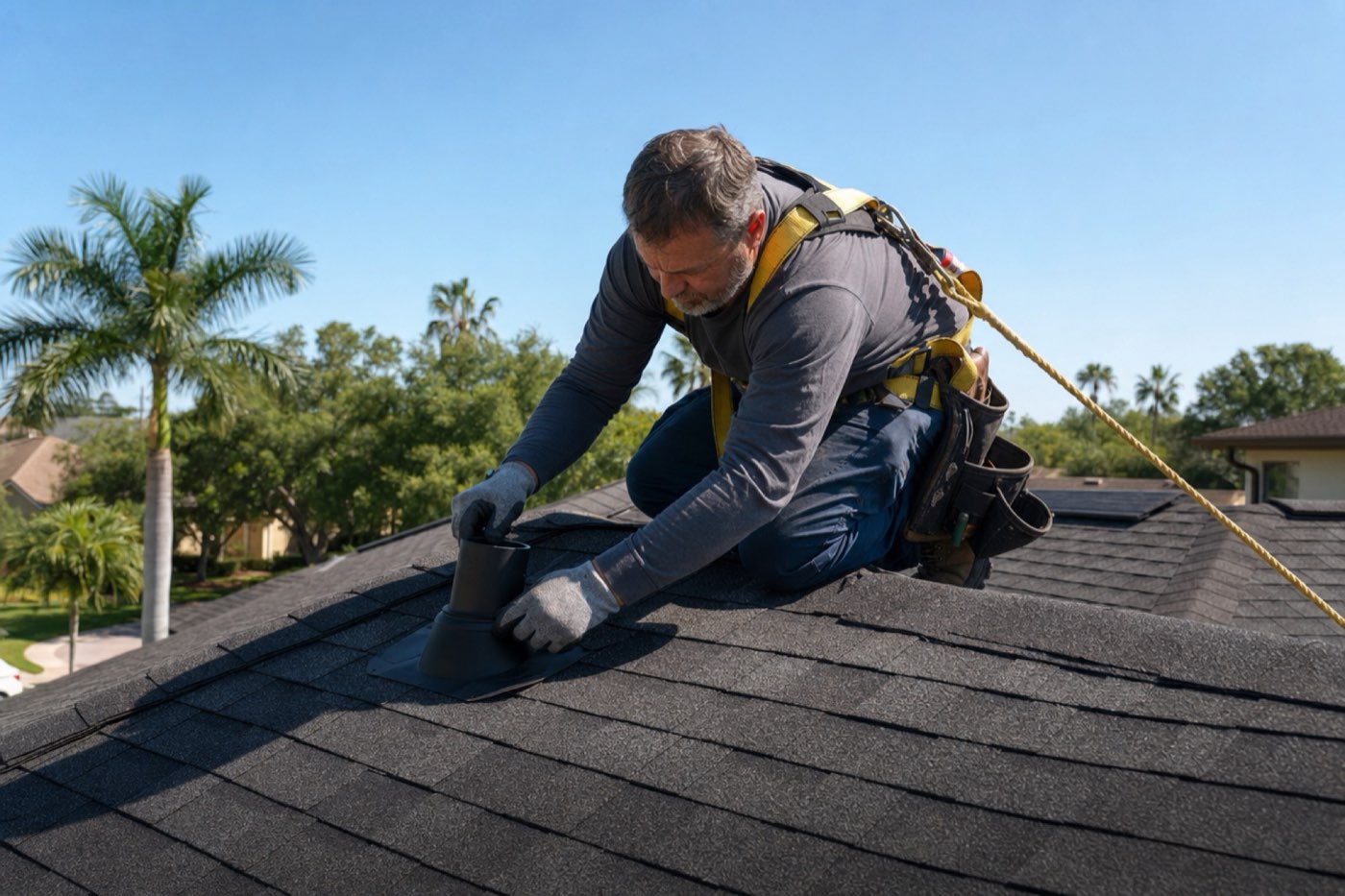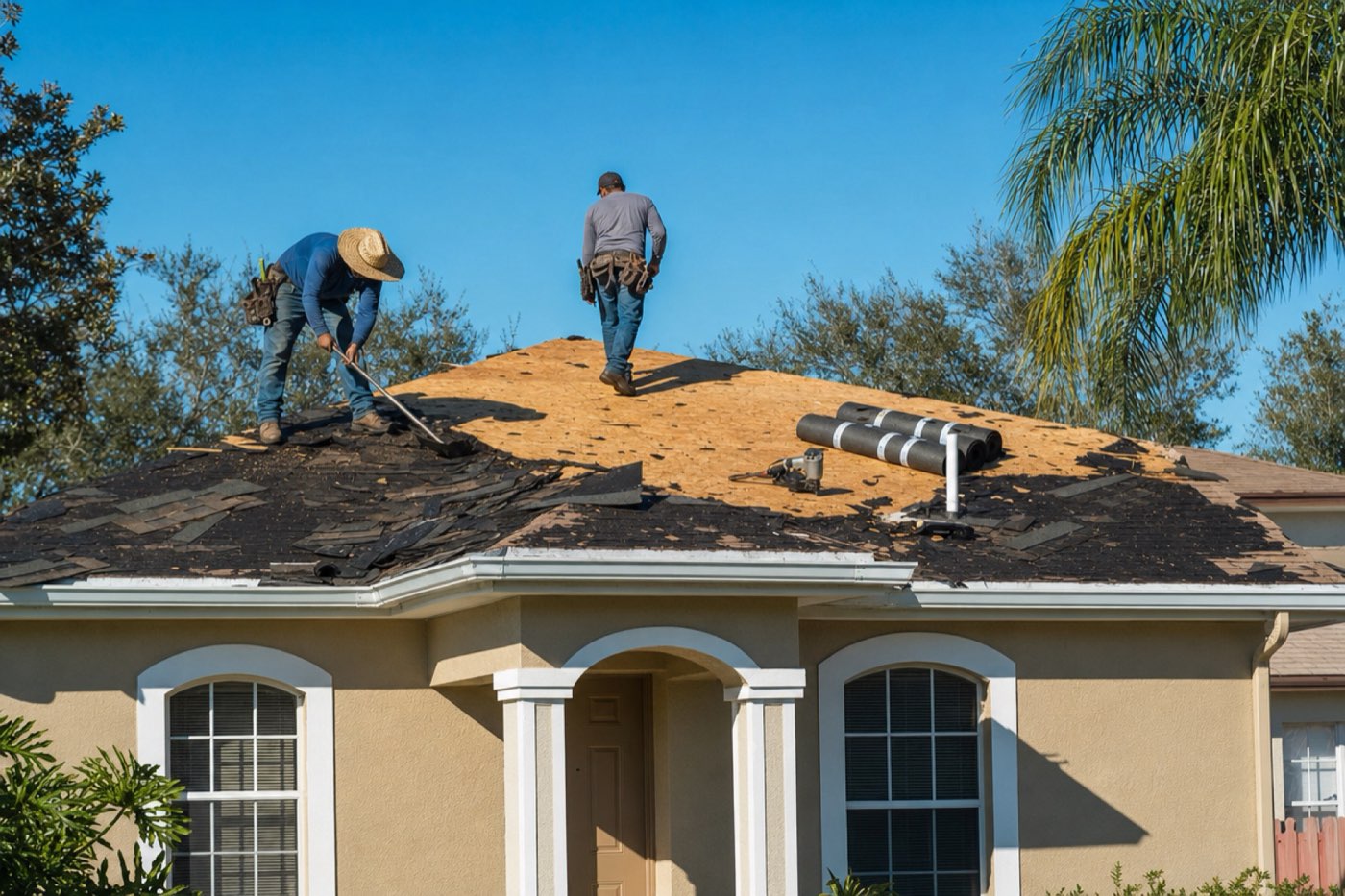
In Orlando, an asphalt roof replacement is built around three code-driven steps: re-nailing the roof deck (6 inches on center along panel edges and intermediate supports for the specified sheathing condition), installing a secondary water barrier whenever roof covering is removed and replaced, and passing the city's dry-in inspection. A full tear-off to the wood deck is required whenever the sheathing is not code-fastened, cannot hold effective fasteners, or is water-soaked or deteriorated. Plan your budget around those steps, and get a quote that prices each one separately.
Does the Florida Building Code require a full tear-off in Orlando?
It depends on the condition of your deck. Chapter 15 of the 2023 Florida Building Code, Building does not allow a new roofing system over an existing roof or deck when the sheathing is not code-fastened, cannot accept effective fasteners, or is water-soaked or deteriorated.
The code does not say every asphalt replacement must be stripped to the wood deck. It says the deck must allow compliant, effective attachment. If it does not, the old roofing comes off.
The City of Orlando's residential re-roof application separates replacement from re-cover work, so a re-cover can be a permitted category. In practice, though, the re-nailing and secondary water barrier work described below happens at the deck, which is why most contractors plan to expose it.
A practical rule: if your current shingles are curling, your attic shows stained or soft sheathing, or the deck was never nailed to current standards, expect tear-off.
What does the secondary water barrier require?
When a roof covering is removed and replaced, Section 706.7.2 of the 2023 Florida Existing Building Code requires a secondary water barrier that meets the applicable Florida Building Code roofing provisions. It is a backup layer that helps keep water out if shingles blow off.
The Florida Building Commission's reroof options document lists two retrofit methods:
- Taped joints: cover all roof-deck joints with self-adhering polymer-modified-bitumen tape at least 4 inches wide, then install an approved underlayment system.
- Full-coverage sheet: cover the entire roof deck with an approved self-adhering polymer-modified-bitumen sheet.
The full-deck method is the one people call peel-and-stick. Which method your contractor uses changes the material line on your quote.
The commission's hurricane mitigation rule also describes a full-deck method with approved asphalt-impregnated 30-pound felt, installed with the prescribed nails and tin tabs, a 12-inch staggered grid and 6-inch overlaps.
How is the roof deck re-nailed?
Re-nailing is how an older deck is brought up to hurricane uplift standards. The commission's retrofit text identifies 6-inch-on-center fastening along panel edges and intermediate supports for the specified sheathing condition, as in Section R803.2.3.1 of the 2023 Florida Building Code, Residential.
Spacing is not identical for every roof. The commission's roofing fact sheet says fastening depends on sheathing thickness and points to ASTM fasteners for thinner sheathing.
Older homes with board decking follow a different test. Board decking secured with at least two 8d nails into each roof framing member is deemed sufficiently connected under the hurricane mitigation rule.
Ask your contractor which deck type you have and what fastener spacing applies to it. That answer belongs in writing.
What goes into an asphalt re-roof price in Orlando?
Your price is the sum of the steps the code and the city require. Ask for each as its own line:
| Quote line | What drives it |
|---|---|
| Tear-off and disposal | Required when the deck cannot take compliant fasteners or is water-soaked or deteriorated |
| Deck re-nailing | Sheathing thickness and type; 6 inches on center along edges and intermediate supports for the specified condition |
| Deck repair | Damaged decking; Orlando requires an inspection when it is replaced |
| Secondary water barrier | Taped joints (4-inch minimum tape) or a full-deck self-adhering sheet |
| Underlayment and shingles | Products need Florida product approval or site-specific engineering |
| Permit and paperwork | Orlando requires a building permit, and a recorded Notice of Commencement above $5,000 |
Orlando's permit application asks for your estimated project cost, underlayment and roof-covering details, and fastener information, so a contractor who plans the job properly will already have these numbers ready.
What does Orlando inspect during a re-roof?
The City of Orlando's residential roof permit page requires a building permit for replacement work and a dry-in (in-progress) inspection. The permit process has two inspections: exterior dry-in and final.
At final, a completed inspection affidavit must verify roof-deck nailing and secondary-water-barrier installation. The city does not state that every replacement needs a full-deck tear-off.
If the dry-in inspection is missed, Orlando may require removal of some or all of the roof covering so inspectors can see the underlayment and sheathing nailing. That can turn a cheaper job into a costly redo, so confirm your contractor schedules the dry-in before shingles go on. Our page on Orlando roof permits walks through the paperwork.
Why schedule a tear-off in October?
The dry season starts in October, which gives you a better chance of keeping an open deck dry between tear-off and dry-in. Timing also matters for code: the 9th Edition Florida Building Code takes effect December 31, so ask your contractor which edition applies to your permit and when it will be pulled.
Roofs that come off in the fall get their deck re-nailed and sealed before the next wet season. If you are also weighing metal, compare the two in our guide to shingle versus metal roofs, and see how Orlando hurricanes affect roofs.
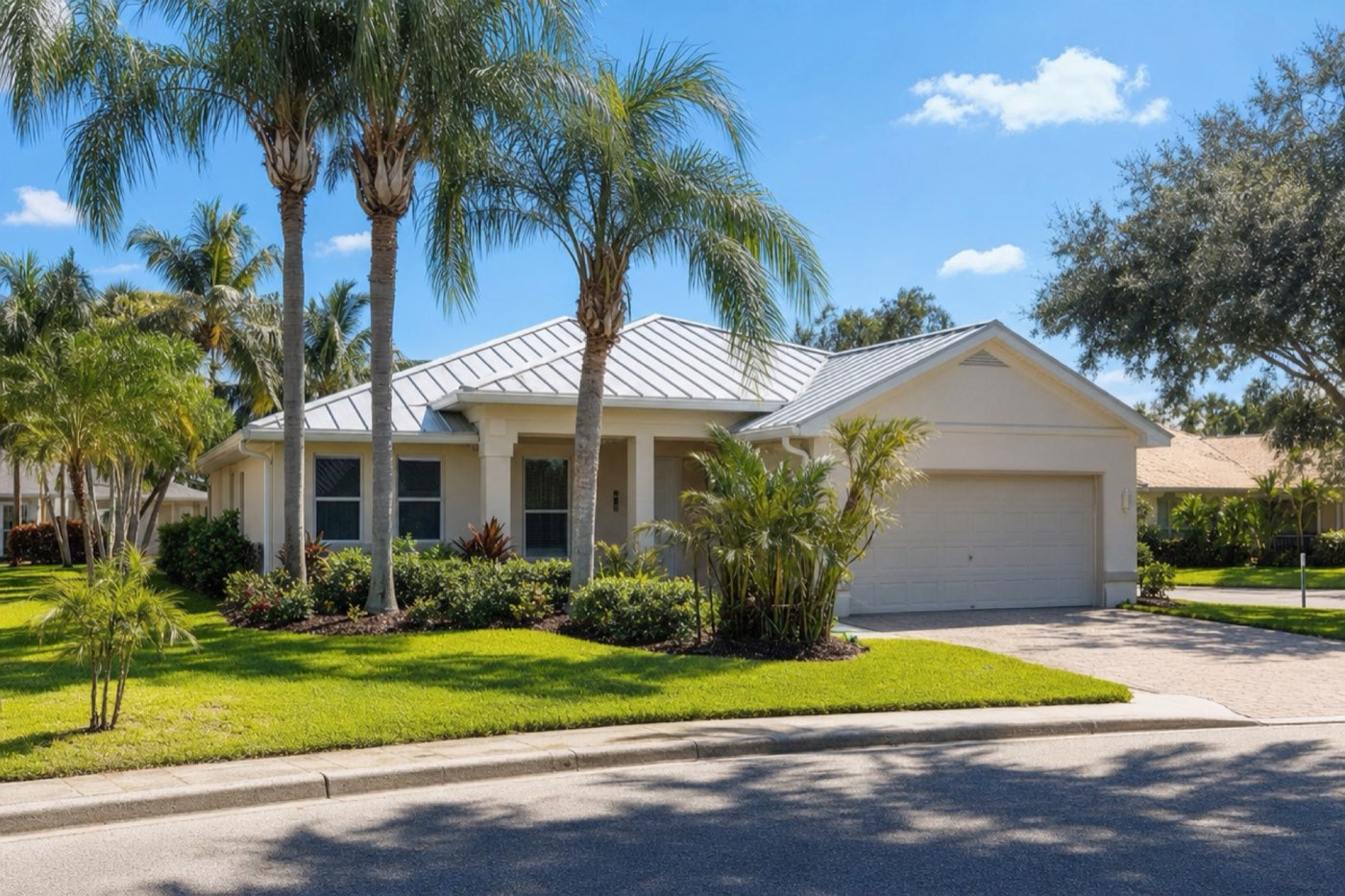
If you would rather have a quote for metal, the metal roof installation page explains what is involved.
Call (689) 220-5832 or send a request to be connected with a licensed local roofing contractor. Orlando Metal Roofer is a free referral service and does not do the roofing work itself.