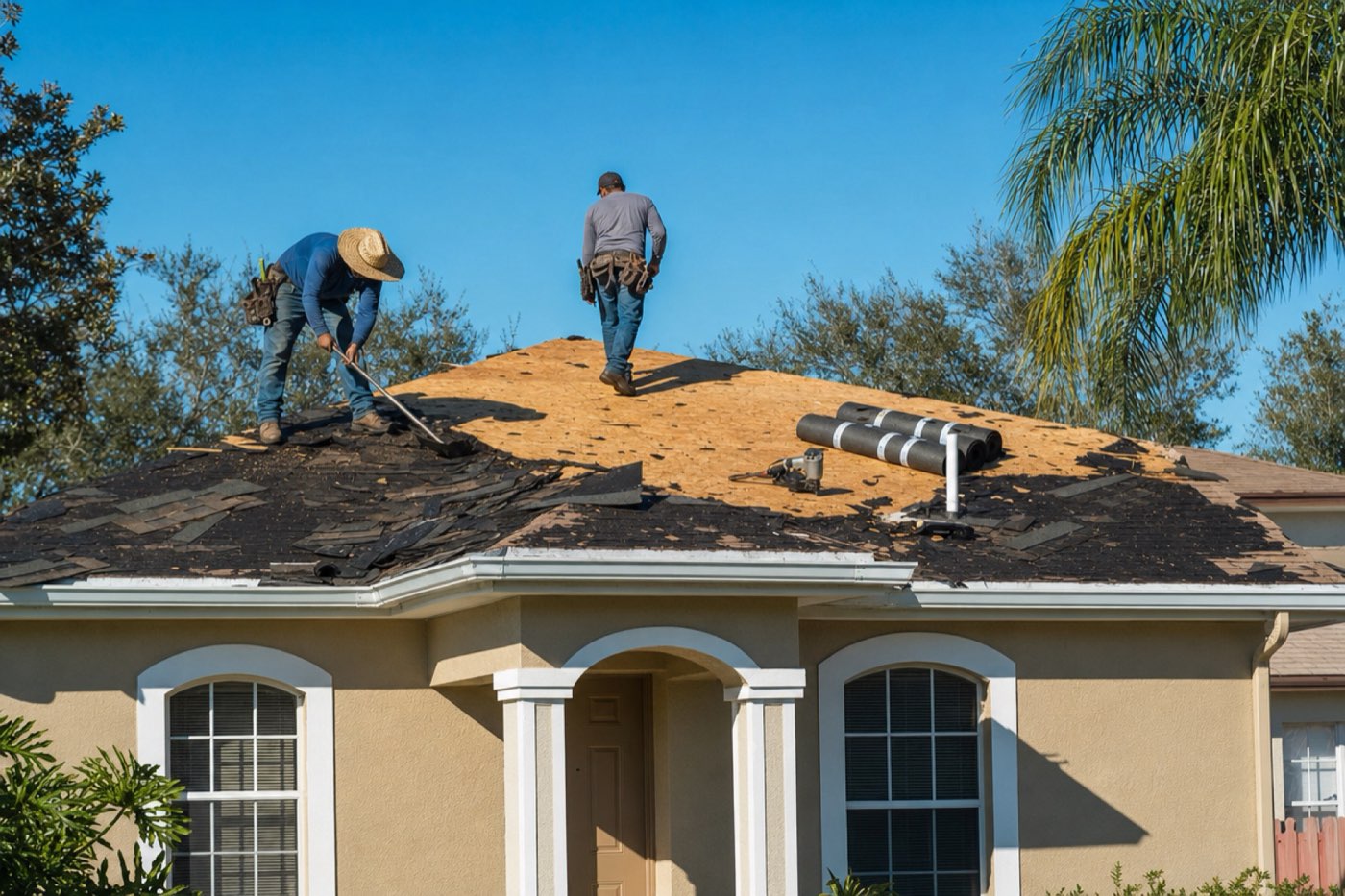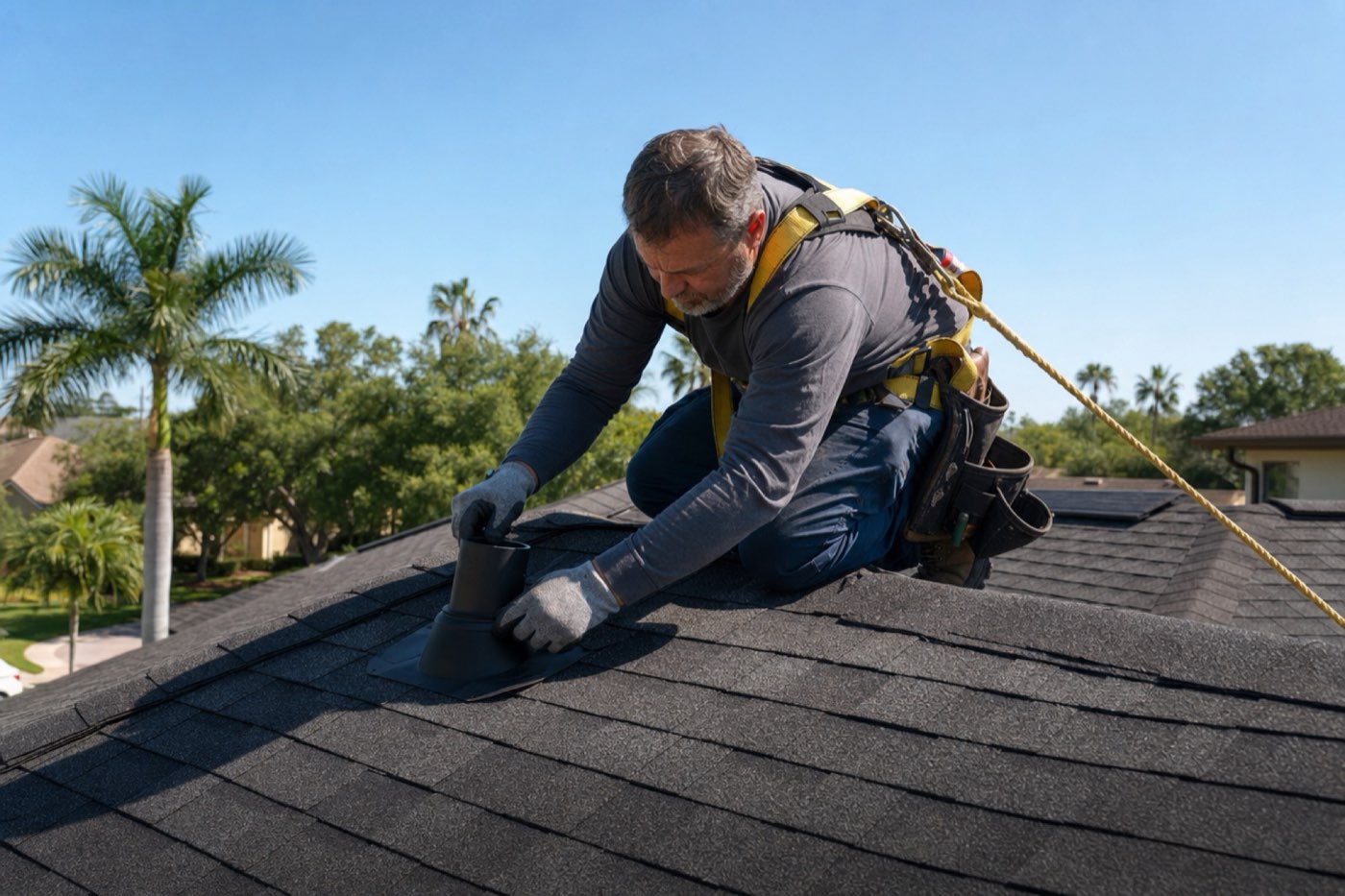
What a leak repair costs in Orlando depends on the scope: a cracked plumbing vent boot, failed chimney flashing, a shingle nail pop and concealed deck damage are four different jobs, so get each one quoted in writing. As of October 2026, the Florida Building Code's 25% rule still exists, but a state exception means a roof built, repaired or replaced to the 2007 Florida Building Code or later can have 25% or more repaired without a mandatory full replacement.
What should you expect to pay to fix a roof leak in Orlando?
Expect a price for the specific repair, not a flat leak fee. The quote should name the exact component being fixed and say what happens if the contractor finds damage underneath.
| Repair scope | What shapes the quote |
|---|---|
| Cracked plumbing vent boot | One roof penetration, plus whether the deck around it is damaged |
| Chimney flashing | The length of flashing at the chimney and the condition of what surrounds it |
| Nail pops on asphalt shingles | How many fasteners have lifted and whether shingles are damaged |
| Concealed deck or underlayment damage | How much is found once the roof covering is opened up |
Ask every contractor to list hidden-damage work as a separate line item. That keeps a small boot replacement from being blended with a larger deck repair. If your leak is on a metal roof, the same logic applies to metal roof repair scopes such as fasteners, seams and flashings.
What is the Florida Building Code's 25% rule for roof repairs?
The code's baseline rule limits repair, replacement or recovery to 25% of an existing building's total roof area or roof section during any 12-month period, unless the entire roofing system or roof section is brought into code compliance. The Florida Building Commission's roofing staff analysis describes this limit, and the 2007 code supplement, Section 611.1.2 carries the same wording.
A later staff analysis, Decision 2020-022, identifies the 25% rule in the 2020 Florida Building Code provisions for existing buildings and roofing. So the rule did not disappear when the code was updated.
What did Senate Bill 4-D change?
Florida Senate Bill 4-D created an exception for an existing roof system or roof section built, repaired or replaced in compliance with the 2007 Florida Building Code or a later edition. The enrolled bill text sets out that exception.
The Commission describes the result in its FY 2021-2022 annual report: 25% or more of a qualifying roof system or section may be repaired, replaced or recovered without requiring full-roof replacement. The 2022 Legislature passed the bill, and the Commission later listed its implementation as an issue involving updates to the Florida Building Code.
What does the repaired section have to meet?
The repaired, replaced or recovered portion of a qualifying roof must comply with the current Florida Building Code. The exception frees you from replacing the whole roof, but it does not let new work follow older standards.
In practice, a repair on a 2007-or-later roof can go beyond 25% of the roof, and the new work still has to meet today's code. A contractor quoting that work should be pricing it to current code, not to the original build.
Does a small repair even trigger the 25% rule?
The rule measures roof area or roof section over 12 months, so a single boot or a few lifted fasteners is a different question than a large section of new roofing. The measurement method can depend on your project scope and the code official's interpretation.
Decision 2020-022 also states that work on undamaged components necessary for a required repair may not be subject to the alteration chapter's 25% requirement in the circumstances it cites. Ask your contractor whether any of that applies to your job rather than assuming it does.
How do you check whether your roof was built to the 2007 code or later?
You cannot prove it from how old the roof looks. Permit records, final inspections, approved plans, product approvals or other records accepted by the local building official may be needed.
The City of Orlando maintains a permitting data and project lookup tool for researching permit records on your address. Start there, save what you find, and bring it to your contractor.
What does Orlando require when a repair becomes a replacement?
The City of Orlando requires a building permit to replace the roof on an existing home. Its residential re-roof application materials require Florida product-approval installation instructions or site-specific engineering for the products used.
The permitting building official determines which code edition controls your project and how it applies. Our page on Orlando roof permits explains the process in more detail.
What should you do this fall?
October is a practical time to schedule leak repairs, because the stains and drip spots you noticed this year are still easy to locate. Work through these steps:
- Mark each leak location inside the house and note the roof feature above it: vent pipe, chimney, shingle field or valley.
- Look up your address in the City's permit lookup to see whether a roof permit, final inspection or plans are on record.
- Request written quotes from licensed contractors that separate each repair scope and list hidden-damage work on its own line.
- Ask each contractor how many square feet or what share of the roof section the work covers, and whether the 25% rule or the SB 4-D exception applies.
- If repairs keep adding up, ask for a replacement quote at the same visit and compare it with the repair total. Our metal roof cost page can help you frame that comparison.
Frequently asked questions
See the questions below for specifics on chimney flashing, nail pops, proving your roof's code year and when to consider metal.
If you want a licensed local roofing contractor to look at your leak, call (689) 220-5832 or send a request. Orlando Metal Roofer is a free referral service that connects you with independent licensed contractors.